
pladis (UK) Limited Modern Slavery Statement
This statement is available to download as a PDF: Modern Slavery statement 2024.
Statement Summary
This is our sixth Modern Slavery Statement. It has been prepared by pladis (UK) Limited in accordance with section 54 of the Modern Slavery Act 2015 regarding our fiscal year from 1st January 2024 to 31st December 2024 (“FY24”).
This statement covers all the company’s UK activities and sets out the steps we take to prevent modern slavery occurring within our business and supply chains. Our purpose is to build a better working world; this includes a commitment to conduct our business ethically and to deliver responsible growth that is inclusive for all. In accordance with pladis (UK) Limited’s Global Human Rights Policy, we will not tolerate any form of human rights abuse, including modern slavery or human trafficking, in any part of our business or within our supply chains.
1. Business Organisation and Structure
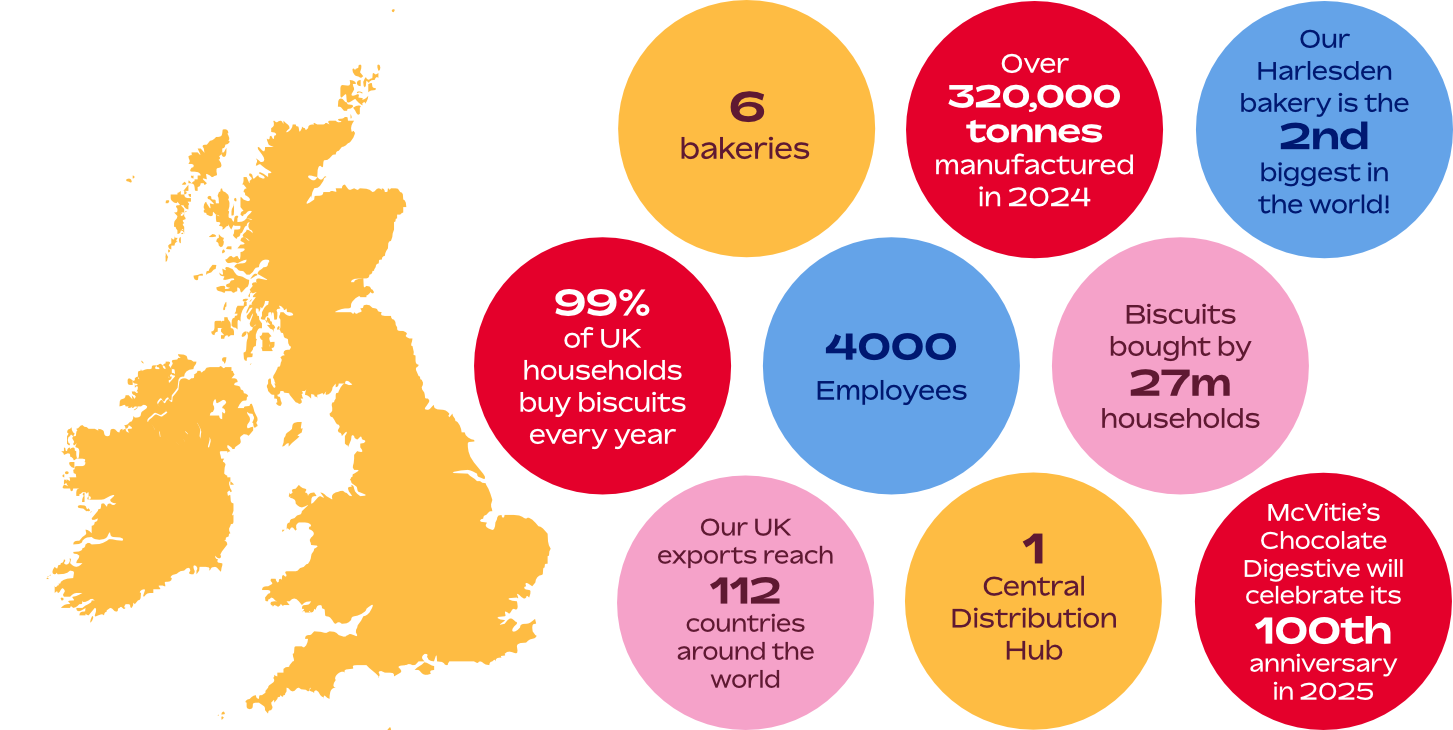
pladis was formed in 2016 and is the proud steward of more than 300 years of family baking and confectionery experience. As one of the world’s leading snacking companies, it is home to beloved brands including McVities, Ülker, Jacobs and Carr’s. pladis is also proud to distribute a range of GODIVA chocolates exclusively for consumer-packaged goods channels around the world. Within the pladis (UK) Limited business, there are over 4,000 employees across six bakeries and one distribution site.
1.2 pladis (UK) Limited in figures
2. Our Processes and Policies
We have several policies that help us manage our modern slavery risk. These enable us, and our suppliers, to be aware of our responsibilities when responding to issues or concerns and help us to have a joined-up approach in tackling the threat of modern slavery.
2.1 Code of Conduct
We operate according to the pladis Code of Conduct which captures the most important responsibilities expected of our colleagues as they go about their work. We expect our suppliers to adhere to the Code, and we do not tolerate abuse of human rights in our operations throughout our business and particularly within our extensive supply chain.
2.2 Whistleblowing Policy
pladis (UK) Limited operates a Whistleblowing Policy which encourages colleagues (including agency workers and contractors) to report any circumstances of potentially unethical conduct within our organisation. In 2024, the Whistleblowing Policy continued to be communicated to all our manufacturing sites and distribution centre on two occasions during the year.
2.3 Human Rights Policy
In 2020, pladis adopted a Global Human Rights Policy applicable to our colleagues, suppliers, and subcontractors. This document sets out the fundamental principles and minimum standards, such as the requirement for humane and safe working conditions and non-discrimination and the prohibition of forced and child labour. We strive to provide a work environment that respects the human rights of all individuals in accordance with international standards, where colleagues can develop themselves, express their opinions freely and will not be exposed to discrimination of any kind.
pladis (UK) Limited Human Rights Policy is based on The Universal Declaration of Human Rights, The United Nations (UN) Global Compact, The UN Convention on the Rights of the Child, International Labour Organisation (ILO) Conventions, OECD Guidelines for Multinational Corporations, UN Guiding Principles on Business and Human Rights and national laws.
2.4 Ethical Policy Statement
pladis (UK) Limited Ethical Policy Statement sets out the core principles that our own administration and manufacturing sites, suppliers and sub-contractors must follow to maintain exacting standards of integrity and professionalism in their working practices. This statement is based upon the Ethical Trading Initiative (ETI) Base Code which is founded on the conventions of the International Labour Organisation (ILO) and is an internationally recognised code of labour practice. This statement sets out the practices that, as a minimum, we will adhere to:
- Employment is freely chosen.
- Freedom of association and the right to collective bargaining are respected.
- Working conditions are safe and hygienic.
- Child labour shall not be used.
- Living wages are paid.
- Working hours are not excessive.
- No discrimination is practiced.
- Regular employment is provided.
- No harsh or inhumane treatment is allowed.
- Safeguarding within the supply chain.
In 2024 we developed and implemented modern slavery remediation policies which outline our procedures for addressing problems, focusing on correcting any identified issues or defects.
2.5 Supplier Ethical Data Exchange (SEDEX)
pladis (UK) Limited are members of the ethical due diligence platform, SEDEX, which is defined as the global Supplier Ethical Data Exchange. It is a non-profit organisation that helps to maintain ethical information in a simple and effective manner. SMETA (SEDEX Members Ethical Trade Audit) is the most widely used format for social audits in the world, enabling businesses to assess their sites and suppliers to understand working conditions in their supply chain. In 2024, all six bakeries and the central distribution facility were SMETA approved, having been audited to our set frequency. This confirmed our practices and procedures were in line with industry standards as well as giving full transparency to our stakeholders. Additionally, pladis (UK) Limited has completed biannual submission of the SEDEX self-assessment questionnaires for all UK manufacturing, office, and distribution sites with the information therein made open to all SEDEX linked members. This drive for transparency within our supply chain is a key provision of the Modern Slavery Act and supports us in our continuing effort to prevent modern slavery ever occurring in our supply chain or organisation. In 2024 we adapted our processes in line with the new SMETA 7.0 standard and accepted the new external audit process. We have continued with the annual internal ethical audit process launched three years before, which is based on the principles of the SMETA audit and ETI (Ethical Trading Initiative).
Additionally, we became members of Ecovadis and completed their assessment. EcoVadis is a globally recognised sustainability rating platform that assesses companies' environmental, social, and ethical performance. It comprehensively evaluates four key themes: Environment, Labour & Human Rights, Ethics, and Sustainable Procurement.
2.6 Audit Process of Subcontractors
We recognise the high-risk nature of temporary labour and usage of labour providers. To that end, we have designed and utilise a robust auditing process designed to dig deep into the practices of a labour provider’s business and its dealings to see how closely they follow their own rules, as well as how far it complies with any external guidelines and nationally recognised standards regarding ethics. This annual process is completed across pladis (UK) Limited manufacturing and distribution sites on all temporary labour agencies as well as long term contractors such as external Hygiene and Security providers. All our labour providers/employment agents for UK manufacturing and distribution sites adhere and operate to all relevant UK Government legislation.
3. Supply Chain Due Diligence & Transparency
Our Procurement Policy and Supplier Code of Conduct, in conjunction with our Human Rights Policy, provide details about pladis (UK) Limited overall ethos, our aspirations for how our business operates and the expectations we have of our suppliers. It is integral to our business strategy and success that we have a positive impact when dealing with our suppliers, colleagues, and wider society wherever we do business. As such, the Procurement Policy describes the company’s commitment to ensuring that all procurement activities are conducted in an honest, competitive, fair, and transparent manner and that incumbent suppliers are appropriately managed on an ongoing basis.
pladis (UK) Limited maintains a preferred supplier list. We conduct due diligence on all suppliers before allowing them to become a preferred supplier. Our Human Rights Policy and Code of Conduct forms part of our requirements with all suppliers and it is necessary to confirm that no part of their business operations contradicts this policy/code.
We recognise the importance of collaborating closely with our suppliers to ensure that they act responsibly. As part of doing business with pladis (UK) Limited, the following stakeholders are required to become members of SEDEX: raw material suppliers, packaging suppliers, key service providers (laundry, warehouses, hygiene contractors) and agents. Additionally, these stakeholders must complete the SEDEX self-assessment questionnaire as a minimum. During our quarterly Ethical Steering Committee meetings, pladis (UK) Limited uses the SEDEX risk assessment tool (RADAR) to identify and review our top 10 highest risk suppliers and proactively collaborate with them to mitigate their risk.
In 2025 our procurement team will launch an updated One pladis Supplier Code of Conduct, a crucial milestone to better align our suppliers with our pladis values and commitments. This Code will define the ethical, sustainable and transparent standards we expect from our partners, reflecting our dedication to people, the planet and responsible business practices.
4. Sustainability
It is well founded that sourcing sustainable ingredients is intrinsically linked to a supplier's ethical credentials, particularly for those ingredients associated with socioeconomic and environmental issues, such as palm oil and cocoa. Utilising sustainable ingredients and ensuring the implementation of ethical practices within their supply chains ensures vulnerable farmers and communities are treated fairly with dignity and respect and that they receive fair prices for their valuable commodity. Sustainably sourced materials, therefore, generally deliver both environmental and ethical benefits. pladis (UK) Limited has a robust sustainability strategy in place with annual improvements planned, measured, and reported on key sustainable challenges. In 2025 pladis (UK) Limited will introduce a global sustainability strategy encompassing our plans as a global business.
4.1 Palm Oil
In 2024, we continued to advance our responsible palm oil programme, reaffirming our longstanding commitment to sustainable sourcing. pladis has been a member of the Roundtable on Sustainable Palm Oil (RSPO) since 2008, and we are proud to confirm that 100% of the palm oil we use supports the RSPO’s sustainability standards. In addition, since 2018, we have been working in partnership with the Earthworm Foundation—a leading not-for-profit organisation—to implement transformative programmes across our palm oil supply chain. This collaboration enables us to drive meaningful, on-the-ground improvements in environmental and social practices within the palm oil sector. One such programme is our efforts in Soubre - a cocoa and palm oil producing region of Cote d'Ivoire (near the Liberian border and encompassing part of Taï National Park). In this region, Earthworm has worked to engage Ivorian farmers to establish good agricultural practices and implement innovative agroforestry pilots. Our partners have also looked to empower farming communities through the creation of Village Savings and Loans Associations (VSLAs), programs that provide financing and credit to people without access to traditional banking.
Through pladis' support of this collective action programme in Soubre, 158 farmers now have access to VSLA financing as of Q1 2024 with over a dozen farmers also receiving training on effective pest management. A select number of farmers have also implemented agroforestry pilots, with two undertaking the development of a crop reconversion scheme to diversify the flora currently grown at the farm level.
In 2024 we continued to reach out to suppliers of ingredients that contain minor amounts of palm oil to determine the sustainability of the palm contents. We collaborated closely with these suppliers to source sustainable palm oil where possible. Since the beginning of the project in 2021, there has been an 80% reduction in the minor ingredients containing uncertified palm oil.
4.2 No Deforestation Policy
pladis (UK) Limited continued to monitor supplier compliance to the No Deforestation, Peatland development and no Exploitation (NDPE) Policy which was launched in 2020. The policy is applicable to all pladis palm oil suppliers. To advance sustainable and deforestation-free palm oil, we have adopted a strategy which combines traceability, certification, satellite monitoring, supplier evaluation and industry collaborations.
4.3 Cocoa
pladis (UK) Limited continues to forge links with cocoa sustainability certification bodies and has partnerships with the Rainforest Alliance and Fairtrade. We have several products that are manufactured in accordance with these standards. Farms, forest communities, and businesses that participate in these certification programs are audited against rigorous sustainability standards based on environmental, economic, and social well-being.
4.4 Other ingredients
pladis (UK) Limited has continued to progress our Back to Farm programme, launched in 2013, which has strengthened year on year, focusing our efforts on sourcing from UK farmers. This reduces emissions and, along with the premium we pay, helps to fund valuable biodiversity initiatives.
In 2022 pladis (UK) Limited partnered with the Roundtable of Responsible Soy (RTRS) and now annually purchase credits to cover our annual usage of soy. These credits go towards supporting production of soy that adheres to the stringent production requirements of the RTRS. Soy, as a commodity material, has significant environmental impacts including; threatened biodiversity and displacement of small farmers/Indigenous people.
5. Capacity Building through Employee Ethical Training
We recognise that our modern slavery strategy can only be effective if we educate our staff and communicate effectively on its importance. Code of Conduct, Human Rights and Modern Slavery training completion is monitored across the business. Moving forward, we will be looking to make sure that completion of these training courses is mandated for all colleagues at a regular frequency. We also monitor and categorise all concerns reported to us (either via our whistleblowing service or any other channel). We have not received any whistleblowing cases reporting modern slavery in the last year.
6. Social Dialogue
In 2024, we continued to work closely with our trade union partners by providing updates on progress being made during our quarterly consultation and communication forums. pladis (UK) Limited continue to be a chartered member of Minority Supplier Development UK (MSDUK). MSDUK brings together innovative and high-growth ethnic minority-owned businesses with global corporations committed to creating an inclusive and diverse supply chain. Additionally, we have supported, engaged, and attended several Stronger Together events. Stronger Together is an impact-driven, not-for-profit organisation that provides businesses with practical training, resources, business services and collaborative programmes to create a world where all workers are recruited responsibly and have fair work free from exploitation. We also continued to work with SEDEX, Ecovadis, ALP, Simply Sustainable, Rainforest Alliance, Fairtrade and other organisations in our efforts toward continual improvement.
7. Future Plans
In the next fiscal year (“FY25”) we are committed to making further business improvements. We will be collaborating closely with our various external partners, referenced in this document, and our suppliers to continually improve our processes and controls, with progress monitored through our ethical steering committee risk and governance framework. Actions include:
- Launch and implementation of the tenets within pladis' first global sustainability strategy.
- Launch and implementation of an updated One pladis Supplier Code of Conduct, a crucial milestone to better align our suppliers with our pladis values and commitments. This Code will define the ethical, sustainable and transparent standards we expect from our partners, reflecting our dedication to people, the planet and responsible business practices.
- Embed the new SMETA 7.0 standard into our management system and utilise within our internal Ethical audit and Agency audit templates.
- Continue to distribute a monthly ethical compliance dashboard and communicate to the wider, senior UK business leaders to highlight performance, good or bad, and garner support on our journey of continual improvement.
- Implementation of the requirements of the EU Deforestation-free Regulation (EUDR) as it applies to our UK operations and the at-risk commodities utilised within our business.
- Employ external resources to complete the following tasks relating to supplier ethical assessment:
- Establish 100% link between pladis suppliers list and Sedex suppliers list and identification of suppliers not linked with pladis (UK) Limited.
- Liaise with project lead and procurement to onboard suppliers who we have established are not linked with pladis (UK) Limited on Sedex.
- All linked suppliers have up-to-date SAQ. Liaise with suppliers lagging behind this target. Identify and report when the SAQs were last updated and work with suppliers to a target of SAQ updated twice a year in line with our own manufacturing sites.
- Using the Sedex Radar tool and based on the Sedex criticality ratings (inherent risk and site risk combination), identify high risk suppliers and the rationale. Liaise with suppliers to improve their scoring and reduce the risk.
- Ensure all suppliers have a minimum of 2-pillar SMETA audit completed in the past 3 years, without overdue non-conformities.
- Embed the Modern Slavery Assessment Tool (MSAT) work stream; making sure high-risk suppliers are obligated to complete a submission and that the response and associated improvement actions are addressed.
- Update the No Deforestation, Peatland development and no Exploitation (NDPE) policy to include other at-risk commodities, specifically cocoa and soy.
- Continue our commitment to building an inclusive, diverse, and equitable culture, which respects local differences and backgrounds and where people can be themselves. Deliver on our pledge to continue to support the various internal working groups, initiatives, and schemes to promote inclusivity, diversity, and equity.
This statement is available to download as a PDF: Modern Slavery statement 2024.


